Reporters Committee’s free Legal Hotline helps journalist investigate abuse, neglect in New Hampshire’s disability care system
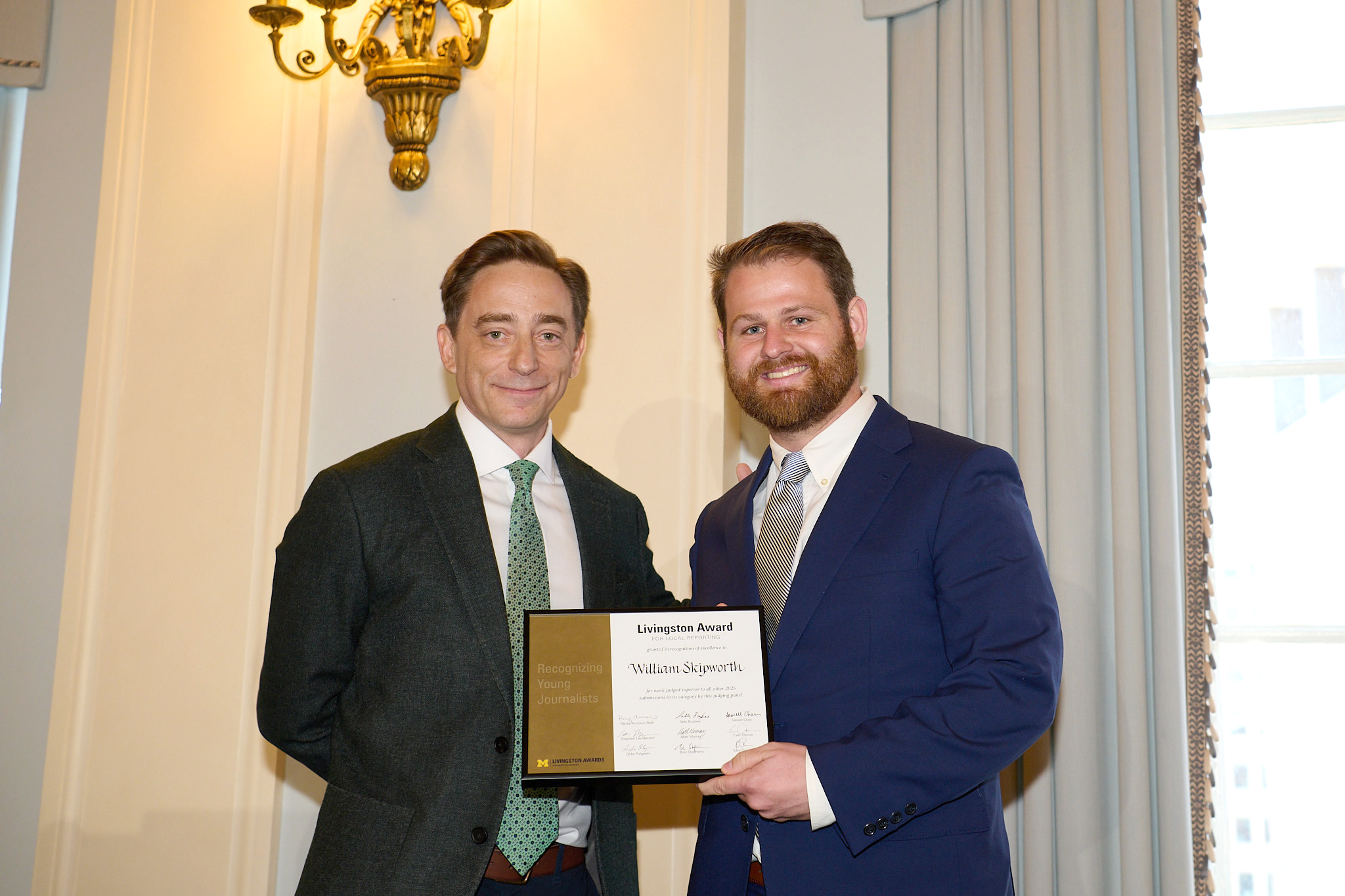
Last year, New Hampshire Bulletin reporter William Skipworth published a three-part investigation that revealed systemic failures and abuse, neglect, and deaths in the state’s taxpayer-funded disability care network.
The series had an immediate impact, sparking legislative reforms in New Hampshire and investigations from state and federally funded watchdogs. Skipworth, who recently won the prestigious Livingston Award for local reporting for the series, credited the Reporters Committee with helping him obtain public records that were critical to his reporting.
The journalist drew on those records, court filings, law enforcement documents, and interviews to tell the stories of vulnerable people who suffered preventable harm in the system, including a man subjected to daily beatings by his caretakers and a man found dead in the woods behind his care home.
“[W]hen William Skipworth tried to assess a system touting its treatment of children and adults with disabilities, he met a wall of official silence,” said Evan Osnos, a Livingston Awards national judge and staff writer at The New Yorker. “It would have been easy to move on in a newsroom of only three reporters. Instead, his skillful, tenacious quest brought lucid humanity to a pattern of hidden abuses, seizing public attention and empowering families to speak for those who cannot.”
When Skipworth joined the New Hampshire Bulletin in January 2025, he knew he wanted to investigate its disability care system. Previously, he reported on abuse and neglect in Missouri’s care for people with developmental disabilities.
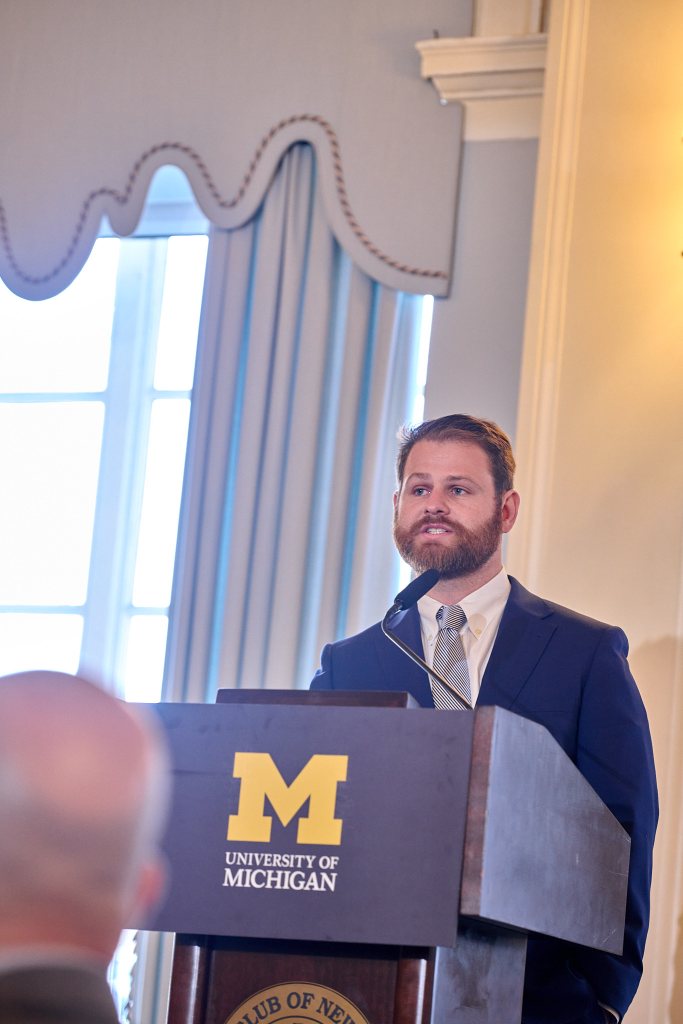
“I really suspected this was a nationwide problem,” Skipworth told the Reporters Committee in an interview. “I was not naive to think this was just Missouri alone.”
He submitted a public records request for an array of documents related to abuse and neglect in New Hampshire’s state-regulated care network, including complaints, investigative records, communications between state officials, and a report that logs deaths in the system. The New Hampshire Department of Health and Human Services denied the request in its entirety.
Skipworth started to negotiate with DHHS over the denial, and he said it began to turn over some of the requested records in a “slow drip” over months. But the agency still refused to release what Skipworth said was “the most important stuff”: the mortality report and complaints of abuse and neglect.
“It felt like I was running into a wall,” Skipworth said. So he reached out to the Reporters Committee’s free Legal Hotline.
Through the hotline, Ellen Goodrich, then the Reporters Committee’s Jack Nelson-Dow Jones Foundation Fellow, sent Skipworth case law that helped the journalist build a legal argument to fight for the records. He filed a complaint with New Hampshire’s Office of the Right-to-Know Ombudsman, which helps settle public access disputes outside the court system, and used the information Goodrich sent him to prepare for an official hearing.
At the hearing, Skipworth represented himself against an attorney for DHHS, who opposed public disclosure of the records he sought.
“At the end, the ombudsman was like, ‘I see both sides of this, and I think you both make really strong and compelling arguments,’” Skipworth said. “I thought that was a win for going up against an attorney who trained her whole career to do this.”
Skipworth said the agency ultimately relented and turned over about 80% of the records he wanted. The documents showed that the tragic accounts Skipworth described in the series — stories of violence and neglect perpetrated by those who were supposed to protect people with disabilities in their care — were illustrative of a broader pattern of harm in the system.
According to the records, from January 2023 through June 2025, the state investigated 467 credible reports of abuse, neglect, and exploitation in its disability care network. There were 119 deaths in the system in the same time period, according to the mortality report, Skipworth reported.
Skipworth said he was “absolutely floored” by the response to the series.
After the first two parts of the series were published, New Hampshire Gov. Kelly Ayotte told the Bulletin that she instructed state officials to investigate the issues raised in Skipworth’s reporting, and she would make sure “we follow through with any changes that need to be made to the system.”
The Disability Rights Center of New Hampshire, a federally funded watchdog group, opened an investigation into the system, as did the state attorney general’s office. The state convened a System Review Committee to launch a formal review and hold meetings to inform the public and question system officials.
And the state legislature passed new reforms, which became law last month, designed to protect people with disabilities from abuse and neglect. The state senator behind the initiative said Skipworth’s series was “the genesis for this bill.”

Goodrich, now a staff attorney at the Reporters Committee, said Skipworth’s use of the free Legal Hotline highlights its versatility. Journalists can reach out to the hotline at any stage in their reporting, even before they want to take legal action.
“William wasn’t forced to take the state to court to get the records he was after — our free legal support gave him the tools he needed to advocate for their release,” Goodrich said. “His persistence resulted in stories that are leading to real change in New Hampshire. It’s incredibly rewarding to see the hotline make a difference here.”
Skipworth said he’s grateful for the Reporters Committee’s free legal support.
“With legal problems, so often, I’m like, ‘Am I going to go sue the state?’” Skipworth said. “I was lucky my organization was willing to go that far. But any help we can get to not have to devote the resources is so helpful.”