Why the Indiana Supreme Court’s fee-shifting decision is a big win for journalists
It may not have made headlines, but the recent conclusion of a public records dispute in Indiana should leave journalists and news outlets in the Hoosier State breathing a huge sigh of relief.
In July, the Indiana Election Division agreed to pay college student Christopher Nardi six figures in attorney’s fees and costs to resolve a case in which Nardi successfully sued the agency to obtain public records.
The settlement was a big win for Nardi, who just months earlier had been told by a state appeals court that he was not entitled to recover any attorney’s fees because, according to the court, he did not “substantially prevail” in his case. That reversal of fortune was made possible thanks to an important ruling by the Indiana Supreme Court, which held in March that requesters like Nardi who successfully obtain a wrongfully withheld public record through litigation are entitled to an award of reasonable attorney’s fees and costs under Indiana’s Access to Public Records Act.
While a dispute over attorney’s fees may seem trivial, the issue of fee-shifting has major implications for the ability of members of the press and public to access data, documents, and other records from government agencies. Last year, the Reporters Committee for Freedom of the Press explained the stakes in a friend-of-the-court brief that urged the Indiana Supreme Court to side with Nardi and vacate the appeals court’s ruling, which threatened to undermine journalists’ efforts to keep the public informed.
“[T]he availability of attorney’s fee awards in successful APRA litigation is an issue of crucial importance to the press — especially for independent journalists and smaller, under-resourced newsrooms,” the Reporters Committee argued in the brief, which the state Supreme Court cited as “helpful” in deciding the case. “At a time when the news media is faced with both increased government secrecy and decreased financial resources to spend challenging that secrecy, it is crucial for journalists and newsrooms to know that if they pursue meritorious APRA litigation, and their efforts to vindicate the public’s right of access are successful, they will receive an award of reasonable attorney’s fees and costs.”
A long fight over fees
Nardi sued the Election Division in 2021 for wrongfully denying his public records request seeking access to three documents related to Indiana’s voter-registration system. The college student told the agency that he was “interested in performing data analysis [on] absentee voting in recent Indiana elections.”
The trial court partially granted summary judgment in favor of Nardi, ordering the disclosure of one of the three documents at issue. Nardi later sought an amended ruling that would grant him more than $61,000 in attorney’s fees and costs because he had “substantially prevailed” in the litigation.
Under Indiana’s public records law, requesters who substantially prevail on their claims are entitled to recover fees and costs — a provision that encourages the public and media to enforce their rights to access government records.
The trial court issued an order concluding that Nardi substantially prevailed in the lawsuit. However, the court awarded him only one-third of the requested fees and costs.
On appeal, the Indiana Court of Appeals affirmed the trial court’s summary judgment but reversed its partial grant for fees and costs. The appeals court found that Nardi had not substantially prevailed — and was not entitled to recover any of his fees — even though he had successfully obtained a record from an agency through litigation.
Nardi then filed a petition asking the Indiana Supreme Court to hear the case.
Concerned that the Indiana Court of Appeals ruling would stay in place, Kris Cundiff, the Reporters Committee’s Local Legal Initiative attorney for Indiana, filed a friend-of-the-court brief in support of Nardi and rallied a coalition of media organizations to join the fight.
“We had to step in and make the case that the Court of Appeals’ ruling would have disastrous consequences for the public’s right to know,” Cundiff said. “If you make it more difficult for requesters to recover fees when they are required to sue and prevail in public records litigation, you’re going to discourage journalists and others from suing government agencies for access to information that belongs to the public.”
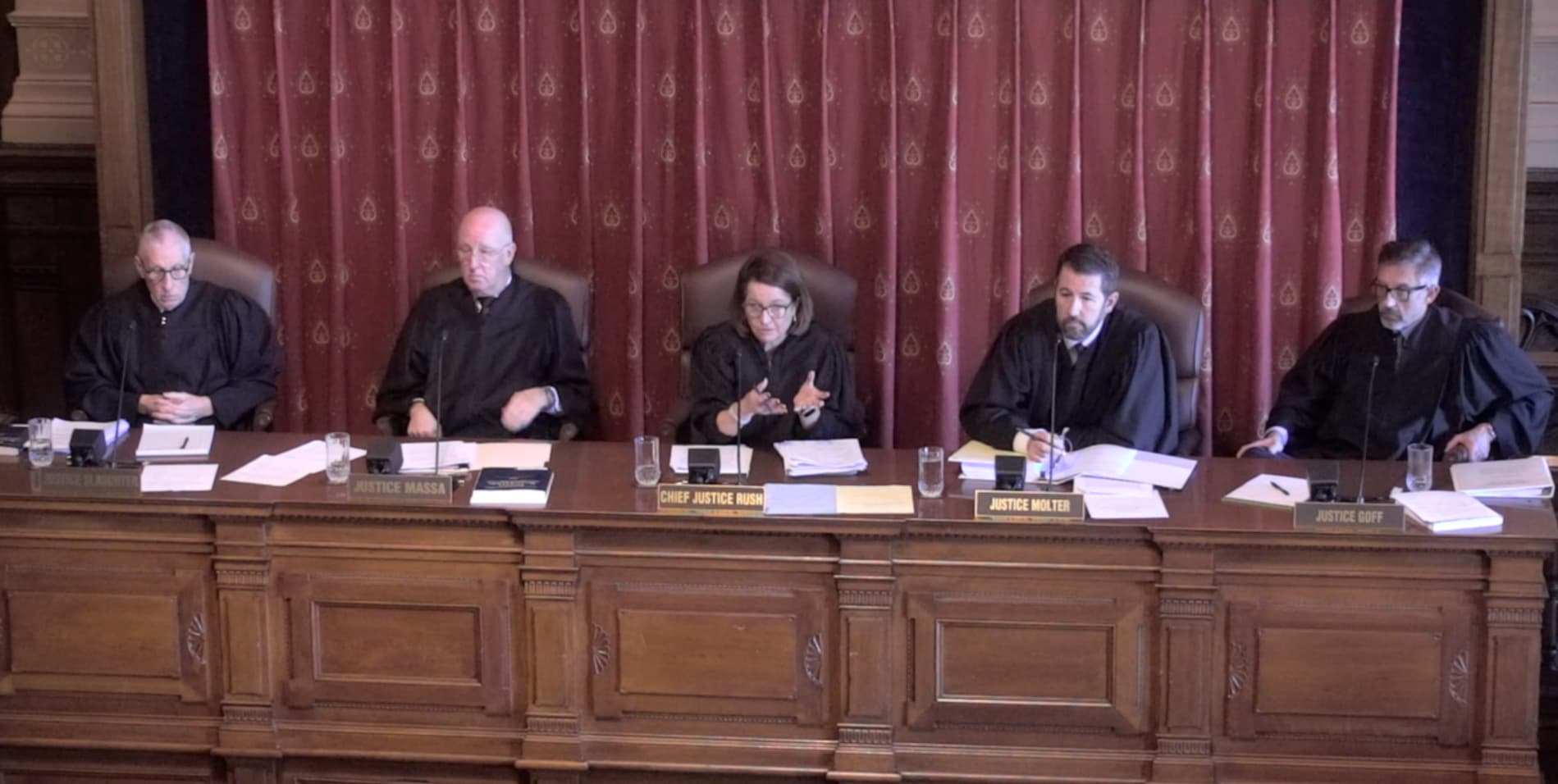
In addition to filing the friend-of-the-court brief, Cundiff also presented oral argument before the Indiana Supreme Court.

Indiana Supreme Court weighs in
In March, the Indiana Supreme Court ruled in Nardi’s favor, rejecting the appeals court’s interpretation of the attorney’s fees provision of the state’s public records law. In a footnote, the Supreme Court’s opinion thanked the Reporters Committee for its “helpful brief and oral argument to aid us in considering these issues.”
The Supreme Court concluded that the trial court was right to find that Nardi “substantially prevailed” in his public records fight — even though he obtained only one of the three documents he requested. However, the state’s highest court found that the trial court erred by reducing his attorney’s fee award to one-third of the total.
In its 15-page decision, the state Supreme Court declined to adopt the appeals court’s complicated quantitative and qualitative analysis for deciding how much in attorney’s fees a substantially prevailing requester can recover in a public records case, noting that such measures would “pose practical problems for trial courts.”
Instead, the Supreme Court offered a more straightforward analytical framework for courts to follow when a public records case results in both successful and unsuccessful claims:
“The prevailing party that has ‘substantially’ prevailed and seeks fees should present evidence to the trial court on the time spent on the successful claims and unsuccessful claims,” the opinion states. “The trial court should award attorney’s fees for the time spent on the successful claims. If the trial court determines that the time spent on unsuccessful claims is so closely related to the time spent on successful claims that the time is indivisible, the trial court may also award attorney’s fees for the unsuccessful claims.”
Because Nardi’s counsel argued that successful and unsuccessful claims were closely related, the Supreme Court kicked the case back down to the trial court to recalculate the fee award. In the end, the trial court determined that the Election Division owed Nardi six figures.