The Colorado Supreme Court ruled that The Sentinel is a ‘citizen.’ Here’s why that matters.
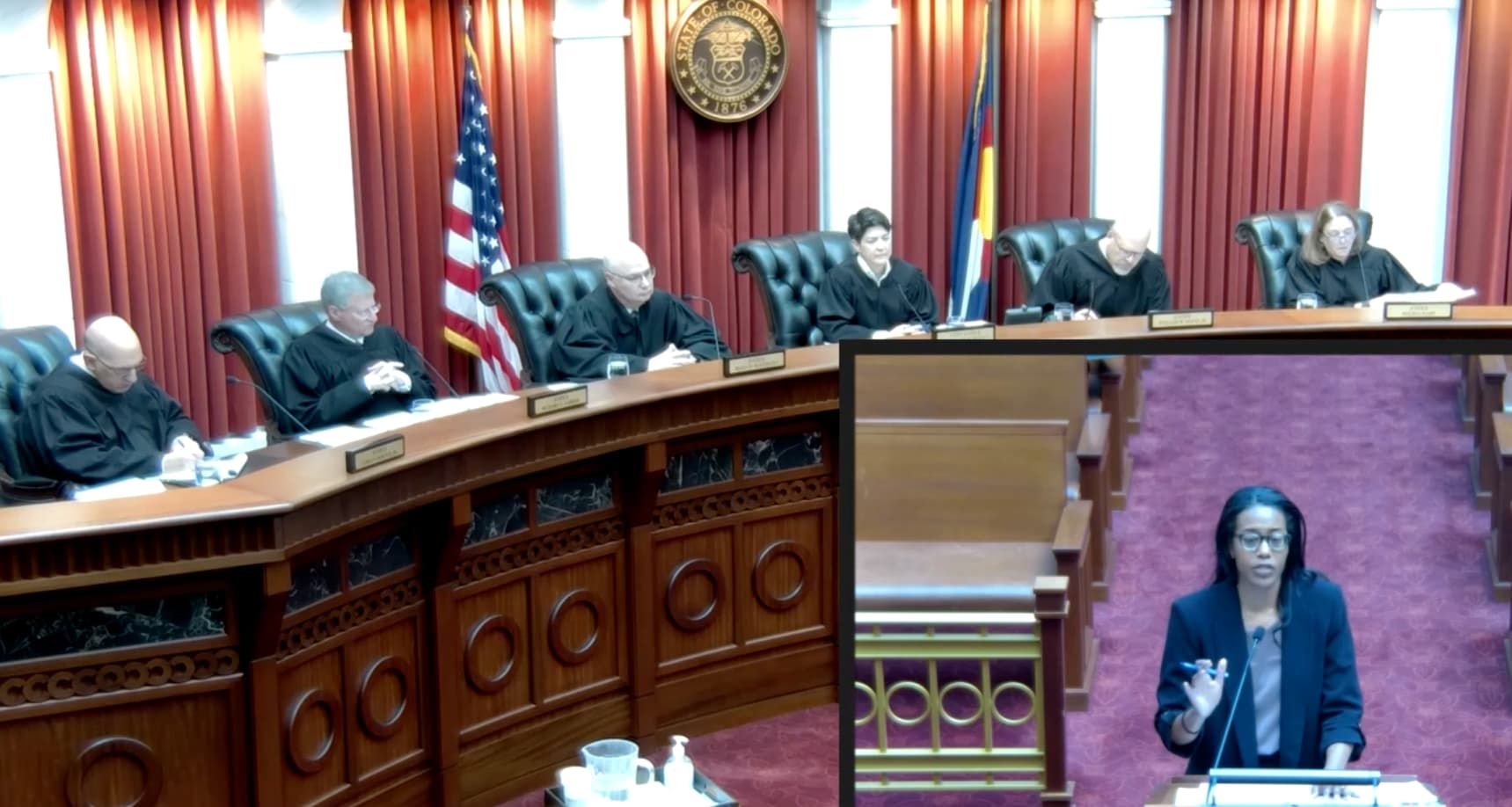
The Colorado Supreme Court held this month that The Sentinel Colorado is a “citizen” under the state’s Open Meetings Law, meaning the news outlet may recover attorney fees if it prevails in a long-running case in which the newspaper seeks to obtain a recording of an unlawfully held secret meeting of the Aurora City Council.
The holding by the state’s highest court reverses an earlier Colorado Court of Appeals decision that would have made it much more difficult for news outlets in the state to challenge government bodies in court when public officials violate the Open Meetings Law by improperly meeting behind closed doors.
“This ruling is an important victory for The Sentinel and for newsrooms all across Colorado,” said Rachael Johnson, the Colorado Local Legal Initiative attorney for the Reporters Committee for Freedom of the Press, who represents the newspaper. “It cements what we already knew — that Colorado courts have recognized, and will continue to recognize, the media’s role in bringing these lawsuits to hold government accountable.”
The lawsuit
The legal dispute between The Sentinel and the Aurora City Council goes back to 2022. In March of that year, Sentinel reporter Max Levy submitted a public records request seeking access to the recording and meeting minutes of a March 14 executive session of the Aurora City Council. Levy filed his request after learning from sources that the private meeting concerned the censure of Councilwoman Danielle Jurinsky in response to comments she made on a local radio show calling the Aurora police chief “trash.”
The city denied the request, claiming that the recording is a privileged attorney/client communication and exempt from public disclosure despite any evidence that the meeting was convened to discuss privileged communications in the first place.
With free legal support from Johnson, The Sentinel sued the Aurora City Council, arguing that the city violated the Colorado Open Meetings Law by improperly announcing and noticing the meeting to the public and making a formal decision about the censure, which is forbidden, behind closed doors.
Additionally, The Sentinel argued that the city waived any claimed attorney-client privilege because the discussions were not held in confidence with the council due to the presence of an adverse third party. The lawsuit asked the Arapahoe County District Court to order the city to release the recorded session in its entirety.
The district court ultimately sided with the city council, concluding that it could withhold the recording because the council had cured any Open Meetings Law violations when it held a regular meeting about the executive session two weeks after the private meeting.
On appeal, the Colorado Court of Appeals later reversed that ruling, ordering the city council to turn over the executive session recording to The Sentinel. However, the appeals court denied the newspaper’s request for attorney fees on the ground that it was not a “citizen” of the state of Colorado.
After both parties appealed to the Colorado Supreme Court, the justices agreed to hear the case and weigh in on the two questions raised by The Sentinel: whether The Sentinel a “citizen” for the purposes of recovering attorney fees under the Colorado Open Meetings Law; and by the Aurora City Council: whether the city council had waived its claimed attorney-client privilege by disclosing a “general description” of what occurred in the closed-door meeting to the public.
The Colorado Supreme Court’s ruling
In its opinion issued on Oct. 7, the Colorado Supreme Court concluded that The Sentinel is, indeed, a “citizen” under the law.
“[A]ny other conclusion would exclude certain members of the public — media corporations like The Sentinel — from the ability to protect public interests in open meetings and collect attorney fees for successful litigation,” Justice Melissa Hart wrote in the court’s opinion. “This is illogical and even absurd.”
While the term “citizen” is not defined in the Open Meetings Law, the Supreme Court concluded that both its statutory and legislative history “support the conclusion that ‘citizen’ … includes media organizations like The Sentinel,” agreeing with arguments Johnson and Reporters Committee fellows made in legal briefs and during oral argument.
Separately, the court sided in part with the city on the attorney-client privilege question, holding that the city council did not waive the privilege because it only discussed unprivileged facts of what occurred in the meeting, not detailed communications between the council and its attorney.
The Supreme Court ultimately did not decide whether The Sentinel was entitled to access the recordings of the closed-door council meeting. Instead, the justices sent the case back down to the Court of Appeals and trial court for further proceedings consistent with its opinion.
Why the Supreme Court’s ruling matters
While we wait for the Court of Appeals to weigh in again, it’s worth highlighting the significance of the Colorado Supreme Court’s holding on the “citizen” question and its impact on news outlets’ ability to recover attorney fees.
As the Reporters Committee has explained before, the issue of attorney fees is not a trivial one for newsrooms. How easy or difficult it is to recover them can sometimes determine whether journalists and news organizations take the expensive step of suing a government agency when officials refuse to disclose records in response to a public records request or when, as in this case, they unlawfully hold meetings behind closed doors.
If the Supreme Court had held that The Sentinel is not a “citizen,” news outlets in Colorado would be forced to challenge violations of the Open Meetings Law knowing that they would be on the hook for expensive legal fees — even if they prevail in the case. That’s a hard pill to swallow for many local newsrooms who lack the resources to spend months or years litigating a case in court.
Reporters Committee attorneys have never charged journalists and newsrooms a penny for their legal services, so The Sentinel does not have to worry about paying fees to Johnson in this case. Still, Johnson said this case was worth pursuing all the way to the state Supreme Court because of the greater impact a good ruling would have on news outlets that don’t have pro bono representation.
“This ruling strengthens the ability of Colorado news outlets to hold their government accountable,” Johnson said. “It’s a decision that will have a lasting impact.”