7th Circuit: Indiana’s police ‘buffer zone’ law is unconstitutional
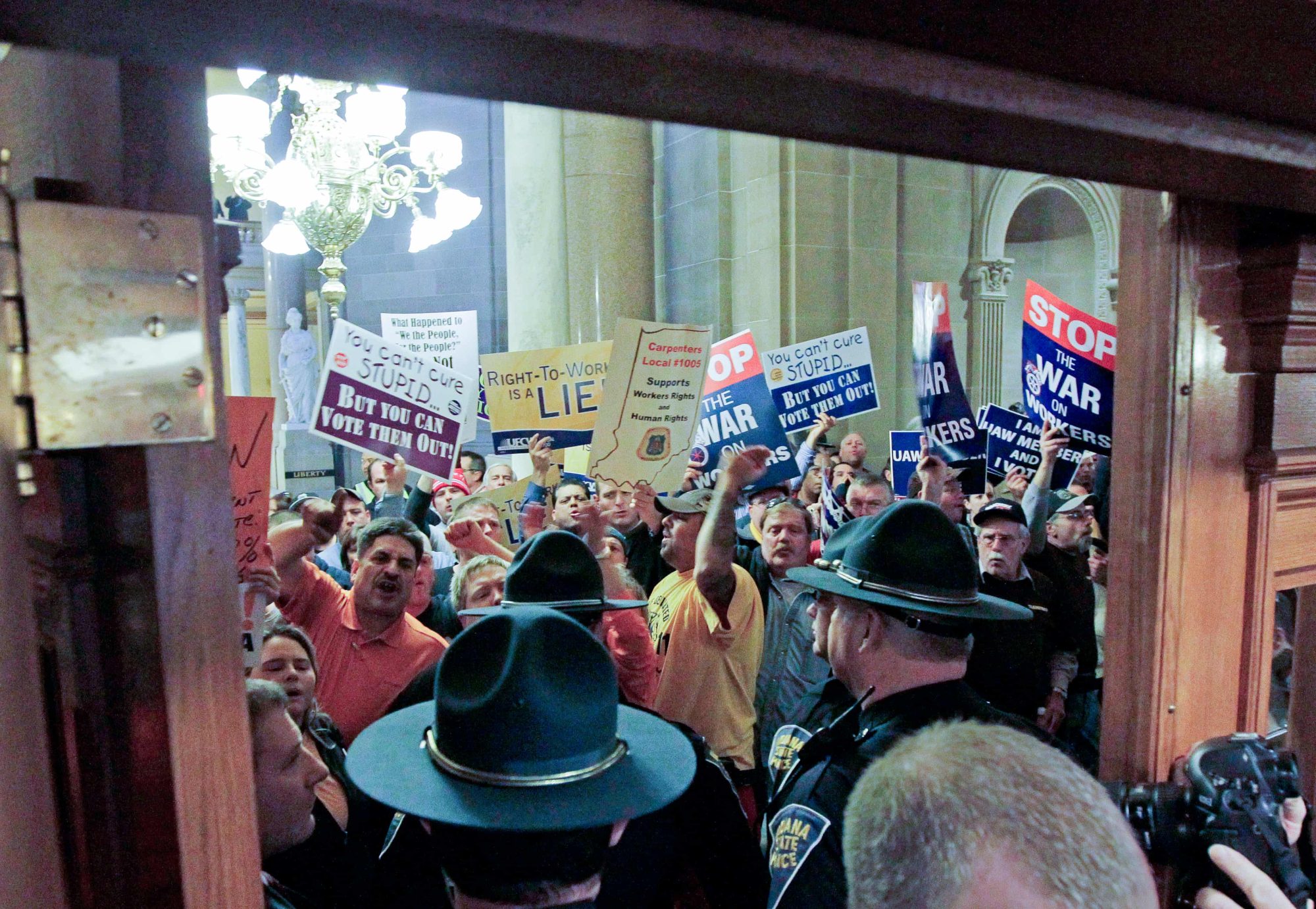
A federal appeals court on Tuesday struck down an Indiana law that makes it a crime to approach within 25 feet of a law enforcement officer after being told to stop, finding the law unconstitutionally vague.
In a 21-page opinion, a three-judge panel of the U.S. Court of Appeals for the Seventh Circuit affirmed a district court’s ruling last year blocking the state from enforcing the police “buffer zone” law because it fails to specify what kinds of behavior by a journalist or other member of the public might prompt an officer to issue an order to stay back.
The appeals court’s decision agreed with arguments made by attorneys from the Reporters Committee for Freedom of the Press in a lawsuit filed in 2023 on behalf of a coalition of journalism and news organizations. In her opinion, Judge Doris Pryor focused on the law’s vagueness, noting how the “vast discretion” it grants police officers could lead to “arbitrary or discriminatory enforcement.”
“The Fourteenth Amendment will not tolerate a law subjecting pedestrians to arrest merely because a police officer had a bad breakfast — no matter how bitter the coffee or how soggy the scrambled eggs,” the judge wrote.
The Seventh Circuit’s ruling is the latest victory Reporters Committee attorneys have won on behalf of news outlets challenging the constitutionality of police buffer zone laws. It comes after favorable decisions by district courts in Indiana and Louisiana, both of which also struck down the laws for being unconstitutionally vague. Last month, Reporters Committee attorneys filed a third lawsuit on behalf of a media coalition challenging a substantially similar law in Tennessee.
“This ruling is a significant win for journalists in Indiana, who deserve to be able to cover law enforcement without fear of arrest,” said Reporters Committee Staff Attorney Grayson Clary, who has helped litigate all three media coalition lawsuits and argued the case before the Seventh Circuit. “These buffer zone laws jeopardize reporters’ ability to bring their communities some of the news that matters most, and it’s critical that federal courts continue to block states from enforcing them.”
Former Indiana Gov. Eric Holcomb signed the state’s police buffer zone law in April 2023. The law, which went into effect three months later, does not require that dispersal orders be tailored in any way to accommodate the First Amendment right to document law enforcement activity. It also authorizes officers to issue a dispersal order even if an individual’s presence does not obstruct the officer in the performance of their duties or pose any other safety risk.
On behalf of the Reporters Committee, The E.W. Scripps Company, Indiana Broadcasters Association, Indiana Professional Chapter of the Society of Professional Journalists, Indianapolis Star, Nexstar Media, and TEGNA, RCFP attorneys filed a lawsuit alleging that the law violates the First and Fourteenth Amendments. The lawsuit asked the court to hold that Indiana’s law is unconstitutional and to block the state from enforcing it.
In his decision striking down the law, Judge James R. Sweeney II of the U.S. District Court for the Southern District of Indiana briefly addressed the First Amendment concerns posed by the buffer zone law. However, his ruling mostly centered on the Fourteenth Amendment and arguments that the law is unconstitutionally vague. The judge noted, for instance, that the law does not offer police officers guidance to help them determine under what circumstances someone should be told to move back, “leaving it susceptible to arbitrary and discretionary enforcement.”
The state appealed the decision to the Seventh Circuit. State lawmakers also responded to the district court’s ruling by passing a new buffer zone statute that only applies if officers in fact have reasonable grounds to believe that an individual threatens to interfere with the performance of their duties. The narrower law, however, has not repealed or replaced the original law.
In affirming the district court, the Seventh Circuit echoed its concerns about the law’s vagueness, concluding that it offers law enforcement officers no guidance when deciding whether to order someone to stay back.
“Without such guidance,” Judge Pryor wrote, “any on-duty officer can use the buffer law to subject any pedestrian to potential criminal liability by simply ordering them not to approach, even if the pedestrian is doing nothing more than taking a morning stroll or merely walking up to an officer to ask for directions.”
After affirming that the law is unconstitutional, the Seventh Circuit sent the case back down to the district court for further proceedings about the scope of relief in light of the U.S. Supreme Court’s recent decision on universal injunctions.