Photojournalist challenges FAA’s ban on drone flights near DHS vehicles
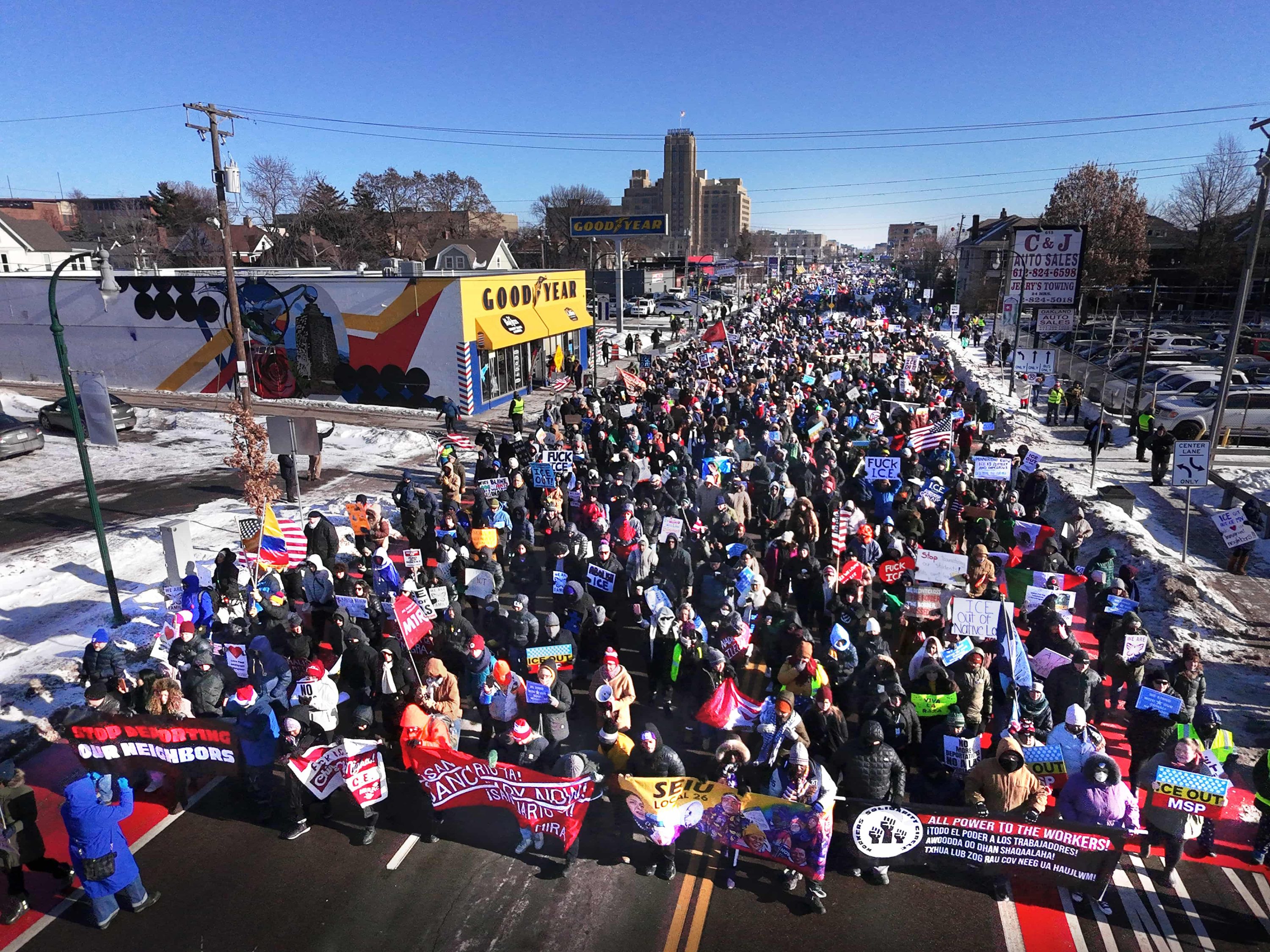
Update: On April 15, 2026, the Federal Aviation Administration withdrew its nationwide ban on drone flights near U.S. Department of Homeland Security vehicles. “This is a big win,” Rob Levine said. “It was heartbreaking to have my drones grounded at a time of such importance to my community, but I’m looking forward to getting back up there and getting back to my journalism as soon as possible.”
Attorneys from the Reporters Committee for Freedom of the Press are representing photojournalist Rob Levine in a challenge to unconstitutional federal restrictions that criminalize drone flights near federal immigration enforcement operations.
Levine, a Minneapolis photojournalist who works with drones, is petitioning the U.S. Court of Appeals for the District of Columbia Circuit to throw out sweeping, nationwide flight restrictions imposed by the Federal Aviation Administration in January that bar drones from flying within 3,000 lateral feet and 1,000 vertical feet of U.S. Department of Homeland Security “facilities and mobile assets.” Drone operators who violate the no fly zone could be subject to criminal and civil penalties.
Represented by Reporters Committee attorneys Grayson Clary and Adam A. Marshall, Levine argues that there is no means of verifying in advance whether DHS vehicles — such as unmarked cars driven by U.S. Immigration and Customs Enforcement agents — are operating in a given location.
That means drone pilots across the country can’t know whether a flight will expose them to liability. As Levine’s petition argues, the predictable result has been to burden and discourage all drone flights, along with a grave chilling effect on the use of drones for newsgathering in particular.
“Drones have helped photojournalists capture powerful perspectives that a reporter on the ground can’t,” Levine said. “But these restrictions force drone pilots to choose between not gathering the news and risking criminal charges, massive fines, or a career-ending revocation of their right to fly. That’s unacceptable.”
The petition argues that the flight restrictions violate the Administrative Procedure Act, are unconstitutionally vague, and have had a chilling effect on Levine’s First Amendment right to gather the news and photograph or film matters of public concern.
The petition is the latest example of how Reporters Committee attorneys are helping journalists overcome legal hurdles to report on the federal government’s mass deportation effort and its impact on communities nationwide.
In the past year, RCFP has urged federal courts to drop restrictions on access to immigration records; called for DHS to protect the rights of journalists; helped journalists and news outlets fight legal battles for immigration records; and published a guide — in English and Spanish — to help journalists understand legal issues they may encounter while reporting on immigration.