AP challenges federal court rule restricting access to immigration records
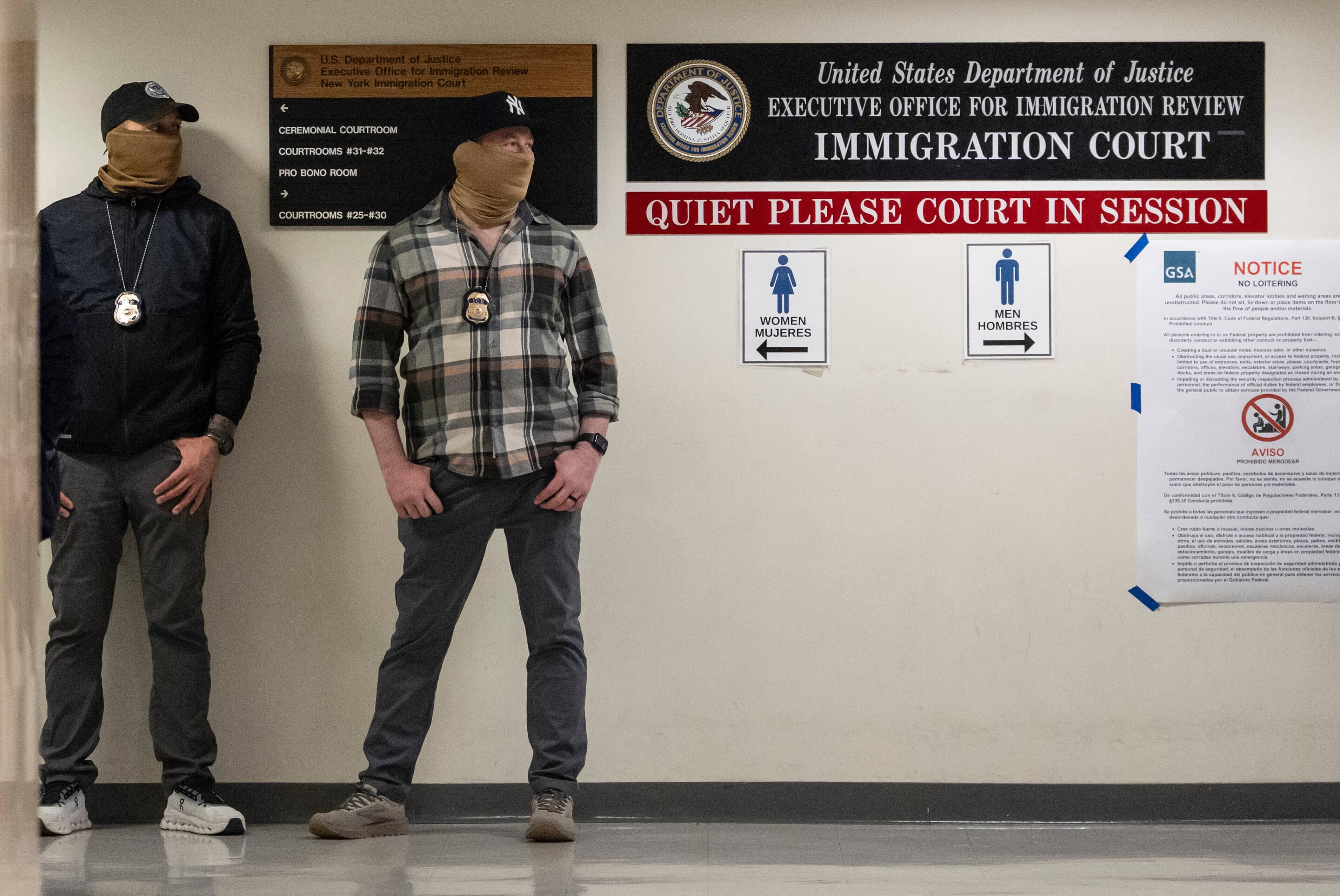
Reporters Committee attorneys are representing The Associated Press in a First Amendment challenge to a federal court rule that makes it difficult for the press and public to monitor the Trump administration’s nationwide immigration enforcement operations, a matter of intense national interest.
In a lawsuit filed last month, the AP asks the U.S. District Court for the District of Columbia to block the enforcement of Federal Rule of Civil Procedure 5.2(c), a relatively obscure rule that restricts public access to legal filings made in cases in which immigrants contest their detention and deportation in federal court.
The lawsuit argues that the rule has prevented journalists from reporting on these newsworthy cases in a timely fashion, substantially impeding coverage of how the federal government is carrying out its immigration enforcement policies and treating detainees in its custody.
“Rule 5.2(c) unconstitutionally keeps the press and public in the dark about the huge numbers of immigrants being held in federal detention and how those people are being treated by the government,” said Reporters Committee attorney Renee Griffin. “The public has a significant interest in understanding the impact of the federal government’s nationwide immigration crackdown, yet so many important stories are hidden by this court rule.”
The current version of Rule 5.2(c), which dates back to 2007, prevents members of the press and public from accessing legal filings in real time by requiring anyone interested in monitoring immigration cases to physically go to the courthouse to see documents filed by a party. The result is that immigrants’ claims of unlawful detention by the federal government are much less visible to the public than other kinds of federal lawsuits, which are immediately accessible online via PACER, the electronic system for federal court records.
Immigration cases in federal court move quickly, and immediate access to judicial records is essential to journalists’ ability to report on what is happening to immigrants being detained and to the public’s understanding of how the U.S. government is treating them.
Over the past year, Reporters Committee has asked several federal district courts to lift the 5.2(c) access restrictions through a standing order, which individual courts have the power to do. The U.S. Court of Appeals for the Fourth Circuit removed the restrictions in the high-profile immigration case of Badar Khan Suri after Reporters Committee attorneys filed a motion on behalf of The Intercept seeking to make the records public.
In the AP’s lawsuit, Reporters Committee attorneys explain how Rule 5.2(c) has repeatedly hindered journalists’ efforts to report on the Trump administration’s immigration enforcement operations on both a granular and systemic level, sometimes by telling individual stories and other times by analyzing widespread impacts of government policies.
In one case, the lawsuit states, the AP was unable to access legal filings for its breaking news coverage of the detention of the wife of an active-duty U.S. Army sergeant. The case was especially newsworthy in part because it signaled a departure from a previous U.S. Department of Homeland Security policy of “leniency toward the families of members of the military and veterans.”
“Lack of access to these documents undermines the benefit of public scrutiny, and indeed often results in less prominent news coverage or none at all,” the AP’s lawsuit argues. “It contradicts the principles of openness that are protected by the First Amendment and integral to a functional democratic system.”
The AP is represented in this case by Reporters Committee attorneys Griffin and Adam A. Marshall.
The lawsuit is Reporters Committee’s latest effort to help the public better understand the Trump administration’s immigration enforcement campaign and its impact on their communities.
Earlier this month, for example, Reporters Committee attorneys sued several federal agencies on behalf of independent journalist Jackie Botts for access to records that could help shine a light on a deadly immigration raid at a California cannabis farm.
Last month, Reporters Committee attorneys filed two lawsuits on behalf of news outlets in Pennsylvania and Louisiana challenging secrecy surrounding how state governments are working with federal immigration enforcement agencies. Reporters Committee attorneys representing Oklahoma newsrooms filed a similar lawsuit in that state in May.
And in February, a FOIA lawsuit Reporters Committee attorneys brought on behalf of The Guardian shook loose data that revealed the vast majority of people who were targeted for deportation for the first time in 2025 had no criminal history.
Last year, Reporters Committee published a guide, available in English and Spanish, to help journalists understand legal issues they may encounter while reporting on immigration enforcement and deportation.