In brief supporting New York Times’s lawsuit, RCFP urges federal court to reject Pentagon’s media access policy
Updates:
- On March 20, 2026, Judge Paul Friedman ruled in favor of The Times, finding that the Pentagon’s media access policy violated the Constitution. “In a careful opinion, the court affirmed that our security and liberty rely on the press’s freedom to publish and the public’s ability to access news about government affairs free from state control,” Rottman said in a statement after the ruling. “The Pentagon’s policy cannot be squared with the Constitution and, especially at this moment, threatens to deny the electorate crucial information about the military.”
- Following the ruling, the Pentagon said that it plans to appeal. The Pentagon also said that it would implement new restrictions on the press, including closing a workspace used by journalists. “The new policy does not comply with the judge’s order,” a spokesman for The Times said.
On Thursday, the Reporters Committee for Freedom of the Press filed a friend-of-the-court brief in support of The New York Times’s lawsuit challenging the Pentagon’s press access policy, arguing that it threatens to leave the public in the dark about critical matters of national defense and foreign policy.
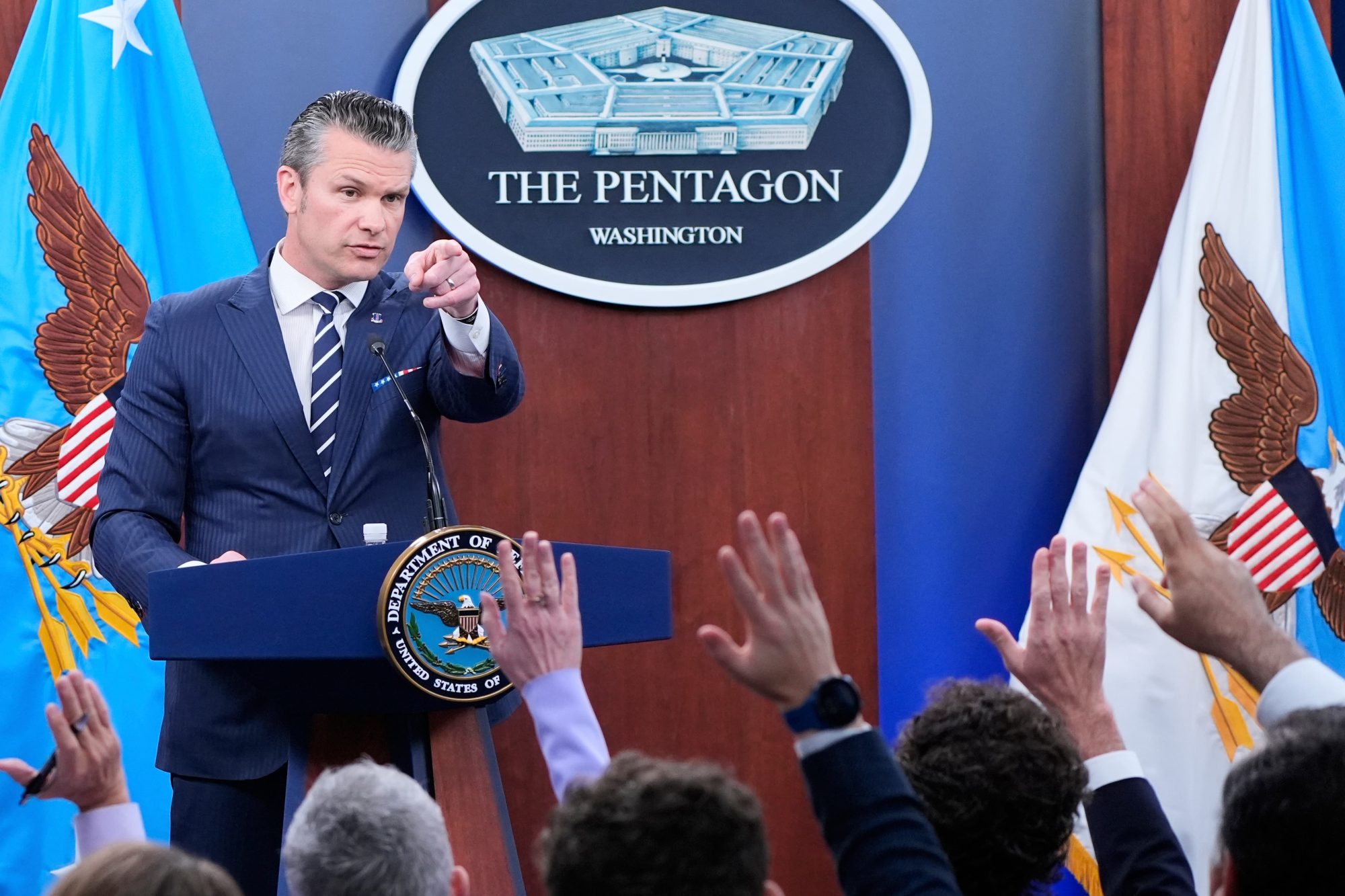
The brief, joined by 23 media industry organizations, urges the federal district court in Washington, D.C., to rule in favor of The Times and reject the Pentagon’s new rules, which went into effect in October. The Times’s lawsuit alleges that the policy violates the First and Fifth Amendments because it affords government officials “unbridled discretion” to deny, suspend, or revoke a journalist’s press pass for engaging in lawful newsgathering, including asking sources questions.
“This case is another line in the sand when it comes to a free press and it will be decided at a time when the public needs information about Pentagon priorities more than ever,” said Reporters Committee Vice President of Policy Gabe Rottman. “Asking reporters who cover this beat to submit to arbitrary restrictions on their ability to ask questions of public officials is entirely at odds with the First Amendment.”
The Times’s case unfolds against a backdrop of intense public interest in the Pentagon and the nation’s military policies. As the Reporters Committee highlights in its brief, American forces recently bombed Venezuela during an operation to extract Venezuelan President Nicolas Maduro and his wife to face federal drug trafficking charges in the United States. Days later, the White House released a statement that refused to rule out a military invasion to take over Greenland.
The Reporters Committee argues in the brief that the freedom to ask questions of military officials has led to a vast amount of essential reporting in the public interest, including breaking news stories about the Sept. 11 attacks, the 2003 fall of Baghdad, and last year’s U.S. strikes on Iranian nuclear facilities. The brief also argues that journalists cannot agree to a policy that affords the Pentagon standardless discretion to punish reporters for asking questions.
The Reporters Committee previously pushed back against an earlier version of the Pentagon’s media access policy, which required journalists to sign a document pledging that they would not report information without the prior approval of government officials, even if it’s unclassified. The Reporters Committee then led negotiations with Pentagon officials in an attempt to loosen the restrictions, resulting in the release of the revised policy that went into effect in October.
Nearly the entire press corps refused to sign the final policy, choosing instead to turn in their press badges, pack up their belongings, and exit the Pentagon — leaving the building empty of a sizable press contingent of the country’s major news organizations for the first time in over 80 years.
“The Pentagon’s new policy is incompatible with the role of journalists in our democracy to seek information and ask questions, including in the domain of national defense and foreign affairs,” the Reporters Committee argues in its brief. “Without vigorous and responsible journalism, and the give and take between reporters and Pentagon personnel, the public is left in the dark about matters of life and death that go to the heart of Americans’ right to know.”
The Times is represented in the case by a team at Gibson Dunn & Crutcher that includes partners Ted Boutrous, a member of RCFP’s board and executive committee, and Katie Townsend, RCFP’s former deputy executive director and legal director.