New documentary ‘Seized’ explores police raid on Marion County Record
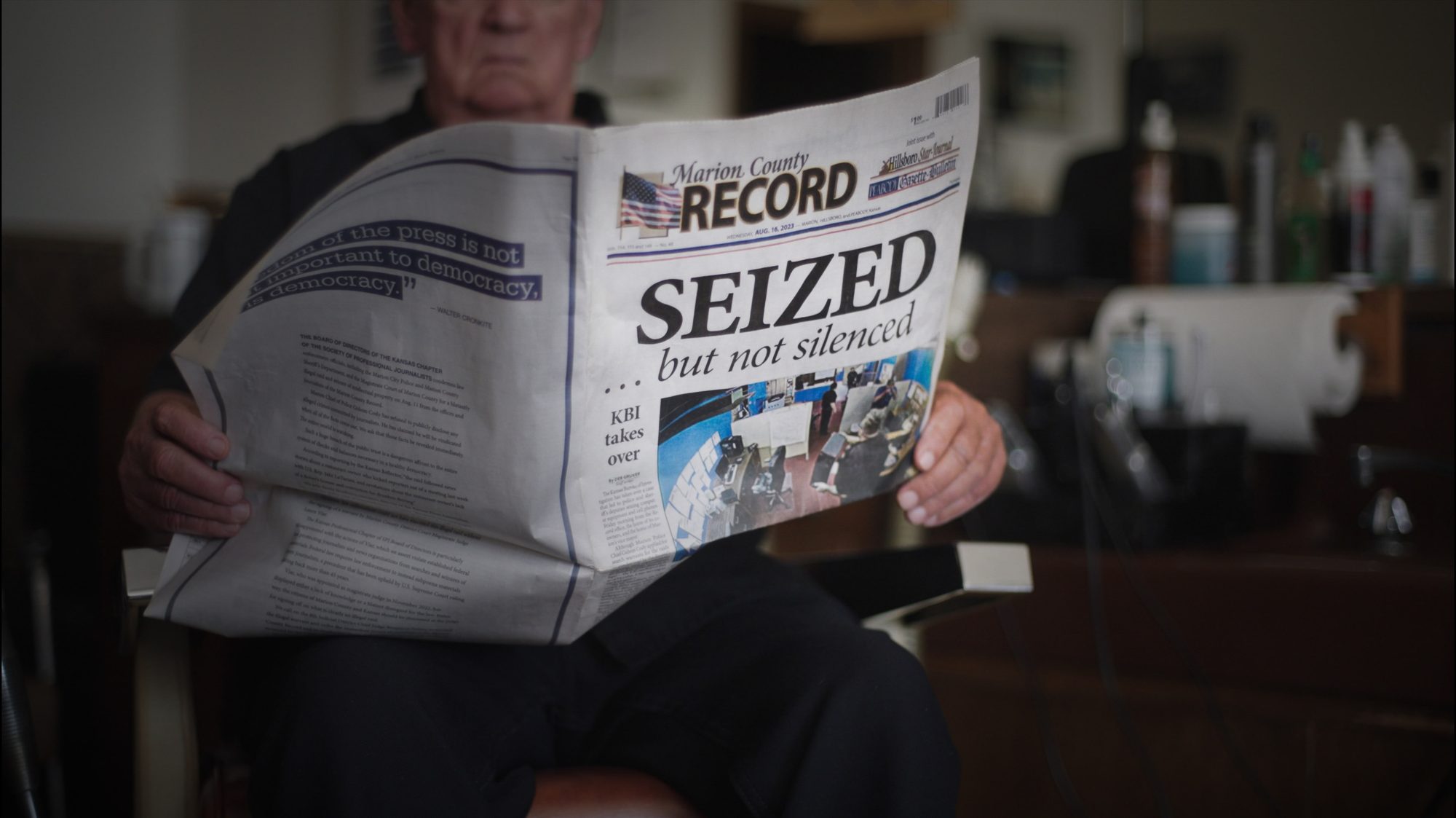
In 2023, the police raid on the Marion County Record made national headlines. Reporters from across the country converged on the rural town of Marion, Kansas, to report on the seizure of the newsroom’s electronic devices, as well as the death of the newspaper’s 98-year-old co-owner one day after police showed up at her door.
The raid prompted widespread condemnation from press freedom advocates and sparked a nationwide debate about First Amendment rights. Attorneys from the Reporters Committee for Freedom of the Press, who organized a media coalition letter in support of the newspaper, called the newsroom searches “corrosive to the very fabric of our free society.”
While the legal fallout continues to unfold several years later, the national spotlight on Marion County and the newspaper has largely faded away. But a new documentary seeks to refocus the public’s attention on the raid and its impact on the newspaper and the town it covers.
In “Seized,” director Sharon Liese and her team weave together dramatic police bodycam and surveillance footage and interviews with a large cast of characters to tell a compelling story that explores police abuse of power, the role of journalism in a small town, and the importance of press freedom.
Ahead of the film’s Washington, D.C., premiere during the 2026 DC/DOX Film Festival, the Reporters Committee spoke to Liese about what her crew’s cameras captured when the national news media left Marion County and what she hopes viewers will take away from the documentary. (This interview has been edited for length and clarity.)
Why did you decide to make a documentary about the relationship between Marion County and the Marion County Record in the wake of this police raid?
It’s a great question because I thought I was telling a story about an egregious attack on the First and Fourth Amendments, but what happened very quickly when we got to Marion was that we saw that there was this tension between the community and the Marion County Record. And we really wanted to get at that [tension].
The film is about so many different things. It’s about abuse of power. It’s about a rogue cop. It’s about a conspiracy. So it’s about all of those things, but it’s also about this community.
The film includes interviews with so many different people, including police officers involved in the raid, city officials, and community members with strong opinions about the newspaper. What do you think that collection of voices adds to the story?
I think it adds a lot. You know, there’s so much going on in our country right now with respect to freedom of the press and free speech. And I think the tone of the community really gives us a sense of how this kind of thing is possible. I think it is really important to hear their voices so that people can see that these little [disputes] can really erupt into something really big, something that challenges the Constitution.
We were kind of seeing everyone’s blind spots, which we all have. And we really wanted the film to convey to people that it’s really important to kind of look at your blind spots. Because that’s where all the emotion lives.
How important was it to have access to so much police bodycam and surveillance footage?
When I heard that there were seven body cameras and three more surveillance cameras, I just thought, this is a multi-cam shoot. I probably thought that we would string it out longer, but in the edit, I kept feeling like we wanted more of [the footage] upfront so you had a sense of what actually happened. So it really helped.
We really felt that footage would be the vérité. That was the most powerful, explosive vérité that we had for the film. There’s something so haunting about seeing [Joan Meyer, the newspaper’s co-owner] stand up for herself and her rights and the rights of all Americans in the bodycam footage, knowing that she died doing this.
The film tells part of the story of the Marion County Record through the eyes of a young reporter named Finn, who joined the paper after the raid. Why did you decide to focus on him?
He kind of served as an avatar for the audience. [His questions] were the questions an audience would have, questions that we came into the story having. We thought he would be a great way in. He’s a new grad from the University of Chicago, and he’s from New York City. When I shot his first day at the paper, I was like, he’s somebody we can follow. Juxtaposed to Eric [Meyer], he’s just so different, and he’s a fish-out-of-water story.
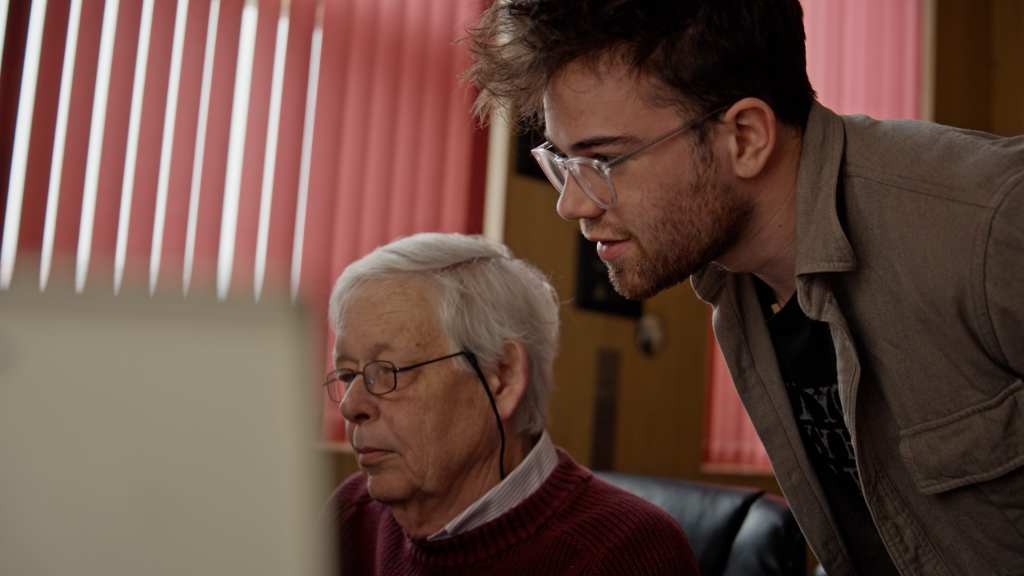
At the end of the film, Finn reflects on the town’s frustration with the Marion County Record, and he says, “I think people aren’t used to having a local newspaper these days.” What was the significance of that comment to you?
He’s helping us see [the tension] in the context of all small towns. As the mayor said [in the film], they want a newsletter that says this is what’s happening and this is what’s great about our community. And they don’t want a real hardcore journalist who has an approach like The Washington Post or The New York Times. They don’t really want that. In some ways, they don’t care how their tax money is being wasted.
What do you hope viewers take away from the film?
What I mentioned before about blind spots, that’s a really important message from the film. If you look at how this happened and why this happened and peoples’ high emotions with regard to the paper and Eric [Meyer], you can see how that can snowball into blinding you from seeing things that you actually do believe in. Because if you ask [Mayor] Mike Powers, “Do you believe in freedom of the press?” he will say, “Absolutely.” But it doesn’t seem to comport with saying that the paper shouldn’t be looking into things that we’re doing.
I don’t expect that people who see my films will move 180 degrees, but if they can shift a little and look inside themselves and learn something about how they’re seeing the world — how they’re seeing the Constitution, in this case — those things are really important. And, of course, just in general, it’s important to see just how vulnerable freedom of the press and freedom of speech are right now.
“Seized” will be screened at 1:30 p.m. on Saturday, June 13, at the Woolly Mammoth Theatre Company in Washington, D.C. For tickets, visit the DC/DOX Film Festival website.