News outlets challenge Tennessee restrictions on press access to executions
Updates:
- On Jan. 16, 2026, Chancellor I’Ashea L. Myles of the Davidson County Chancery Court ordered the state to provide journalists expanded access to execution proceedings, finding that its restrictions on news media witnesses likely violated state law and the First Amendment. “Having an independent media to report fully on the events of executions serves the public interest,” the judge wrote.
- On April 9, 2026, the Tennessee Supreme Court temporarily blocked the lower court’s order allowing expanded media access to executions.
Reporters Committee for Freedom of the Press Local Legal Initiative Attorneys Paul McAdoo and Beth Soja and legal fellow Allyson Veile are representing a news media coalition in a new lawsuit challenging Tennessee’s restrictions on press access to executions, arguing that they violate state law, the state constitution, and the First Amendment.
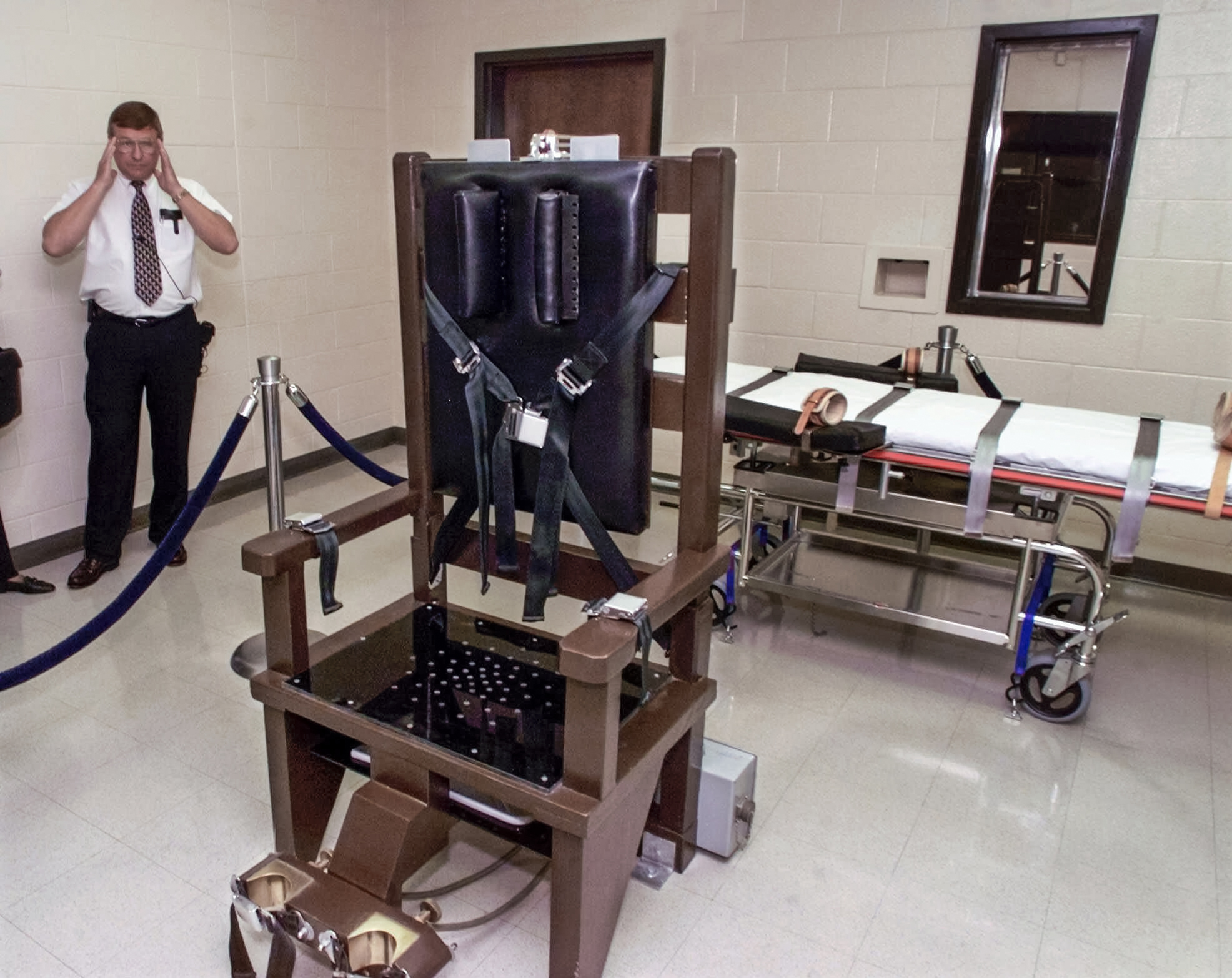
On behalf of The Associated Press, Gannett, Nashville Public Media, Nashville Public Radio, Scripps Media, Six Rivers Media, and TEGNA, Reporters Committee attorneys argue that press access protocols adopted by the Tennessee Department of Correction significantly limit journalists’ ability to inform the public about state executions by lethal injection and electrocution. The lawsuit asks the Davidson County Chancery Court to order the state to permit journalists to observe the entirety of future execution proceedings.
“For decades, Tennessee law has expressly allowed for media witnesses at executions to help ensure that the state is appropriately carrying out capital punishment,” McAdoo said. “The recent protocols put in place by the Tennessee Department of Correction unconstitutionally prohibit observation of critical portions of execution proceedings, making it virtually impossible for journalists to provide the public with a complete and independent account of what takes place when the government exercises this ultimate power.”
Since 1994, Tennessee law has permitted seven members of the news media to witness executions. TDOC protocols, however, significantly restrict what those media witnesses are able to observe before, during, and after executions by lethal injection or electrocution.
Under lethal injection protocols adopted in January, journalists are unable to witness several critical steps of the execution proceedings, including the preparation of the syringes and of the condemned, the state’s administration of lethal injection drugs, and the physician examination and pronouncement of death. The TDOC adopted similarly restrictive press access protocols for deaths by electrocution in 2017.
The lawsuit argues that the protocols have severely impacted the news media’s ability to provide the public with accurate information about how the state carries out executions. During two separate execution proceedings, media witnesses were allowed to access just 10 and 12 minutes of the proceedings, respectively, according to the lawsuit.
“Each execution that Defendants carry out under these current protocols violates the press’s — and the public’s — right of access and the news media’s duty to hold their government accountable,” the media coalition argues.
Tennessee is currently scheduled to execute inmate Harold Wayne Nichols on Dec. 11. The Tennessee Supreme Court also recently set four executions for 2026.
The media coalition’s lawsuit is part of a broader Reporters Committee push to help journalists fight for transparency in execution proceedings.
In May, for example, Reporters Committee Indiana Attorney Kris Cundiff filed a lawsuit on behalf of a media coalition in Indiana challenging the state’s ban on media witnesses at executions. Cundiff also represents the Indiana Capital Chronicle in a lawsuit that prompted the state of Indiana to release the amount it paid to acquire a new lethal injection drug. And in September, a media coalition led by the Reporters Committee filed a friend-of-the-court brief urging the Georgia Court of Appeals to rule that the press has a constitutional right to access state execution proceedings.
To learn more about the media coalition’s lawsuit, check out coverage in the AP, The Tennessean, WBIR, Kingsport Times News, and the Nashville Banner.