Reporters Committee reviews Todd Blanche’s record on government transparency, leak investigations
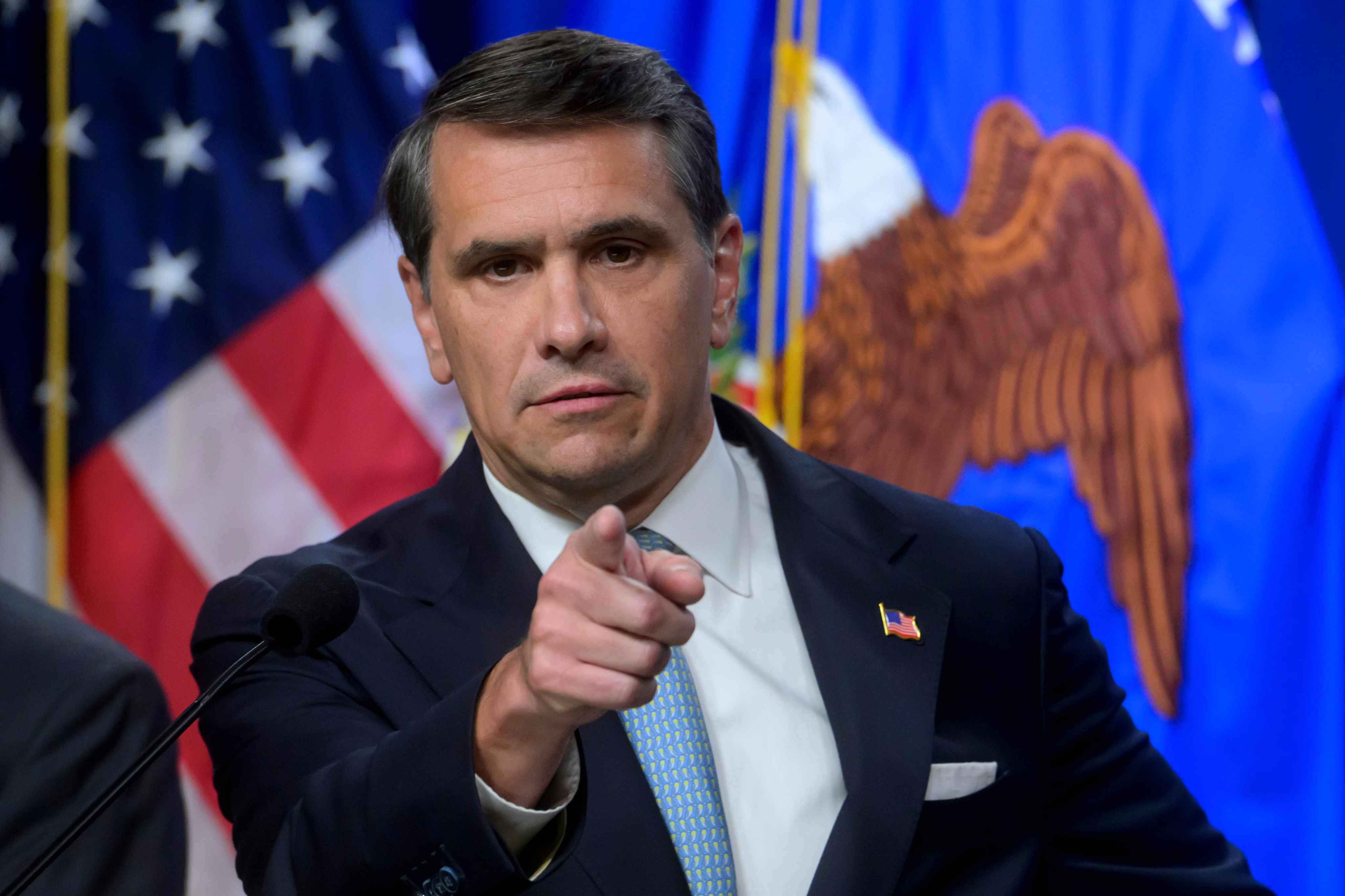
Acting Attorney General Todd Blanche is a U.S. Senate floor vote away from permanently serving as the nation’s top law enforcement official.
On Tuesday, the Senate Judiciary Committee advanced Blanche’s attorney general nomination to the full Senate. The committee vote followed Blanche’s announcement over the weekend that he had formally abandoned the U.S. Department of Justice’s controversial “anti-weaponization fund” and narrowed the scope of IRS protections for President Trump and his family in response to concerns from Sens. John Cornyn (R-Texas) and Thom Tillis (R-N.C.).
Ahead of his Senate confirmation vote, the Reporters Committee surveyed Blanche’s statements and actions related to the First Amendment and newsgathering, including his oversight of leak investigations, which are becoming a hallmark of the second Trump administration. While we do not grade nominees or make recommendations for or against their confirmation by the Senate, we summarize the records of certain nominees to offer information relevant to newsgathering and the legal rights of journalists.
Blanche began his career as a federal prosecutor in the Southern District of New York, eventually managing the White Plains division. During his nine years as an assistant U.S. attorney, Blanche prosecuted both violent and white-collar crime. He left for private practice in 2014 and went on to serve as Trump’s personal lawyer, representing the president in several high-profile matters.
Since rejoining the federal government in March 2025 as deputy attorney general under Pam Bondi, Blanche’s tenure has been marked by the pursuit of the identities of journalists’ confidential sources and the use of subpoenas and other investigative tools directed at reporters working on stories touching on national security.
Notably, in April 2025, the department under Bondi rescinded important protections for the press that were implemented in 2022 by Attorney General Merrick Garland. The rescission of Garland’s reforms of the DOJ’s “news media guidelines” made it easier for department lawyers to obtain and use these tools to identify leakers. During Blanche’s time as deputy attorney general, for example, the FBI raided the home of a Washington Post reporter and seized her electronic devices as part of a national security leak investigation into a government contractor.
The next month, the Justice Department subpoenaed a freelance journalist for The New York Times following his reporting about a top secret mission in North Korea that took place in 2019. (That subpoena only became public in August 2026.) In March, the department issued subpoenas for records to The Wall Street Journal to identify sources for reporting on the Iran war. And in June, The Washington Post reported that the department had issued grand jury subpoenas to reporters at The Post and The Wall Street Journal, which were withdrawn following legal challenges by the newspapers. It is unclear when the department authorized those subpoenas.
The Justice Department has continued to direct legal demands to journalists after Blanche took over as acting attorney general in April. In July, he authorized grand jury subpoenas to several New York Times reporters, as well as to their third-party communications providers, seeking the source of information for their stories on the Qatari-donated Air Force One. The department withdrew those subpoenas following a hearing on the newspaper’s motion to quash.
Outside of leak investigations, Blanche initiated criminal proceedings against former FBI Director James Comey based on a social media post that the department alleges was a “true threat” — implicating free speech concerns — and oversaw the release of the heavily redacted Jeffrey Epstein files to the public.
Below, we explore Blanche’s record with respect to newsgathering, press freedom, and the First Amendment, including his statements to the press and actions taken as deputy and acting attorney general.
Newsgathering rights and targeting of journalists
Leak investigations have been a fixture of the Justice Department since Blanche took office as deputy attorney general. For instance, early in Blanche’s tenure in that role, he announced a leak investigation into the Venezuelan gang Tren de Aragua. In a statement announcing a criminal investigation into the leak, Blanche added, “We will not tolerate politically motivated efforts by the Deep State to undercut President Trump’s agenda by leaking false information onto the pages of their allies at the New York Times.”
Further, as noted, while Blanche was serving as deputy attorney general under Bondi, the Justice Department rolled back historic protections implemented by Attorney General Garland governing the use of subpoenas and other investigative tools directed at journalists, which barred compulsory process against reporters acting within the “scope of newsgathering” in most circumstances.
Following this change in policy, the FBI conducted an unprecedented raid on Washington Post reporter Hannah Natanson’s home in January, seizing her phone, work computer, personal laptop, and smart watch.
Blanche was also serving as deputy attorney general when the Justice Department issued a subpoena to a freelance journalist for The New York Times seeking to force him to disclose his sources for a story about a failed Navy SEAL Team 6 mission in North Korea during Trump’s first term as president. The existence of the subpoena was revealed in a New York Times news story in August.
The Justice Department has also issued grand jury subpoenas to Wall Street Journal and Washington Post reporters in relation to reporting on the administration’s military activity. According to The New York Times, the now-withdrawn subpoenas would have required journalists to answer questions about sources of leaked information related to decision making in the ongoing conflict in Iran and the military and law enforcement operation in Venezuela in early 2026. The department also issued subpoenas for records to Wall Street Journal reporters and reportedly to other outlets.
The chief communications officer of The Wall Street Journal’s parent company called the records subpoenas “an attack on constitutionally protected newsgathering” and an “effort to stifle and intimidate essential reporting.” Reporters Committee President Bruce D. Brown also noted that historically, subpoenas to news organizations are a “last resort,” relied upon “only after exhausting investigative efforts targeted at non-media sources.”
When Blanche later assumed the role of acting attorney general, Trump reportedly passed him a stack of news articles amid a series of leaks on the war in Iran. Atop the collection of articles, according to reports, Trump placed a sticky note with a single word: “Treason.” During his first press briefing in his new role, a reporter asked Blanche about Trump’s statement that he would jail a journalist who refused to identify the source of leaked information about a downed servicemember in Iran. Blanche stated: “That is something that we will always investigate … and if it means sending a subpoena to the reporter, that is exactly what we should do and will be doing.”
At his July 15 attorney general confirmation hearing, Blanche verified that he authorized the now-withdrawn grand jury subpoenas issued to several New York Times reporters in connection with their reporting on the defensive capabilities of the Air Force One plane gifted to Trump by Qatar. The subpoenas were served on July 10, some at the reporters’ homes, shortly after FBI Director Kash Patel and other Justice Department officials met at the White House. In response to questioning at his confirmation hearing, Blanche stated that the Justice Department was not targeting reporters, but instead viewed them as material witnesses, “just like a reporter would be a material witness to a car crash.”
On the same day, Walter “Jay” Clayton III, currently serving as the U.S. attorney for the Southern District of New York, was before the U.S. Senate Select Committee on Intelligence for a nomination hearing to become the director of national intelligence. During his hearing, Clayton confirmed that, as U.S. attorney, he issued the subpoenas to the New York Times reporters as part of an “ongoing national security investigation.”
When asked if other steps were pursued before issuing the subpoenas, Clayton emphasized that the consultative process was followed, both in his office and with the Justice Department in Washington D.C., but would not comment further on the nature of the investigation. In particular, Clayton said that he implemented “procedures that we have in place to protect the First Amendment, and protect the freedom of the press, and not result in intimidation of journalists.” In response, Sen. Michael Bennett (D-Colo.) replied that the First Amendment is not a “loophole.”
Clayton was confirmed by the Senate on July 28.
Federal prosecutors withdrew the grand jury subpoenas issued to the New York Times reporters, as well as subpoenas issued to third-party phone service providers for the phone records of the reporters and certain family members, after a hearing before U.S. District Judge Arun Subramanian on July 23. In response to The New York Times’s motion to quash the subpoenas, the government arrived at the hearing intending to ask for a two-week abeyance to conduct additional investigative steps.
Throughout the nearly 90-minute hearing, Judge Subramanian questioned the government on why it neglected to follow the Justice Department’s news media guidelines, the policy weakened by Attorney General Bondi in April 2025. The judge stated,“subpoenas are the last step, not the first step, but the last step,” and cited to the guidelines requiring “reasonable and timely notice” to a news organization when issuing a subpoena.
Judge Subramanian also chastised the prosecutor named on an application for an order barring Google from notifying its subscriber of a subpoena. That prosecutor had represented to a magistrate judge that the underlying investigation was not public when the Justice Department had confirmed its existence in a public statement. During the hearing, prosecutors would not divulge on what basis Blanche had authorized the department to seek reporters’ records and testimony without exhausting other alternatives and why he permitted delayed notice to the affected journalists of the records demands.
Free speech
In 2023, Blanche was among several attorneys who represented Trump in a criminal case related to his alleged efforts to overturn the 2020 presidential election.
In that case, Trump’s defense team claimed that he was immune from criminal prosecution for his tweets alleging election fraud because they fell within the scope of the president’s official duty to address the public on matters of public concern.
The following year, Blanche defended Trump in New York state court against 34 felony counts of falsifying business records in the Stormy Daniels matter. During the litigation, the court issued a “gag” order to restrict Trump from making statements about the proceedings outside the courtroom. In opposition to the order, Blanche argued that Trump’s ability to post on social media constitutes political speech and that preventing him from posting would be akin to preventing him from campaigning.
The court ultimately upheld the gag order and found that Trump violated it multiple times through public statements on social media and his campaign website.
Blanche argued that Trump never willfully violated the order and was legitimately responding to “a barrage of political attacks.” The judge was unpersuaded by these arguments, saying they lacked factual support and Blanche was “losing all credibility with the court.”
As acting attorney general, Blanche secured an indictment against former FBI Director James Comey based on Comey’s Instagram post featuring seashells arranged to depict the numbers “8647.”
While the message has emerged as an anti-Trump slogan (“86” is a slang term for getting rid of or canceling something; Trump is the 47th president), the indictment stated that the post “contained a threat to kill” Trump. In May 2026, Blanche said others who post the term won’t necessarily be charged like Comey without additional evidence such as proof of intent, which Blanche said prosecutors have in Comey’s case. To date, the government has not produced such evidence.
In another case — in which protesters flew a flag bearing the same slogan — a federal judge wrote that it was “difficult to fathom” how the government concluded “a reasonable observer would view the flag as a true threat,” the constitutional threshold for threatening speech that does not receive First Amendment protection.
Government transparency and public access to information
While serving as Trump’s personal attorney, Blanche wrote a letter to then-Attorney General Garland opposing the release of Special Counsel Jack Smith’s report investigating Trump’s retention of classified national security materials at Mar-a-Lago.
Labeling the report a “partisan weapon” and criticizing Smith’s appointment as special counsel, Blanche argued that releasing the report “is obviously not in the public interest — particularly in light of President Trump’s commanding victory in the election and the sensitive nature of the ongoing transition process.”
At Blanche’s deputy attorney general confirmation hearing, he again testified that he opposed the report’s release. In response to later written questioning, Blanche reiterated his position that Smith’s appointment was unconstitutional and that Smith’s prosecutorial actions “under the guise of being a Special Counsel” were “legally invalid.”
On Feb. 23, 2026, District Judge Aileen Cannon granted a motion by Trump and his former co-defendants to permanently block Volume II’s release, citing Smith’s unlawful appointment and Bondi’s determination that the records were an “internal deliberative communication” that should not be released outside the Department of Justice.
On April 1, 2026, while Blanche was deputy attorney general, the DOJ’s Office of Legal Counsel issued a memorandum declaring the Presidential Records Act unconstitutional and excusing the president from compliance with its requirements. Since the PRA was enacted in 1978 following the Watergate scandal, presidential administrations across both parties — including during Trump’s first term — have complied with the law. In May, a federal judge issued a preliminary injunction barring the administration from relying on this change in policy to ignore recordkeeping requirements.
During Blanche’s tenure as acting attorney general, a journalist reported that the Department of Justice removed news releases on its website relating to prosecutions arising out of the riot at the U.S. Capitol on Jan. 6, 2021.
The department confirmed the removals and said it was “proud to reverse the DOJ’s weaponization under the Biden administration.” Characterizing the information as “partisan propaganda,” the department stated it would “do everything in [its] power to make whole those who were persecuted for political purposes.”
After Bondi left her role as attorney general, she told lawmakers in a closed-door interview with the House Oversight Committee that Blanche oversaw “the entire release” of the Epstein investigative files, including the redaction process, under the Epstein Files Transparency Act.
The law mandated the release of the documents. It also included specific instructions that no record be withheld or redacted “on the basis of embarrassment, reputational harm, or political sensitivity” to any public figure.
Since the files’ gradual release, lawmakers and Epstein survivors have criticized the Justice Department for redacting documents, including the names of prominent individuals, without justification.
Further, an NPR investigation found the Justice Department withheld some Epstein files related to allegations that Trump sexually abused a minor and removed documents from its public-facing database where accusations against Epstein also mentioned Trump, in violation of the congressional mandate.
Because of Bondi’s assertion that Blanche handled these releases, House Oversight and Government Reform Committee Chair James Comer (R-Ky.) announced he intends to interview Blanche as part of his panel’s probe into Epstein.
During his July 15 confirmation hearing, Blanche defended his handling of the Epstein files, acknowledging that redaction mistakes were made in the process. He described the process as “herculean task to review millions and millions of potentially responsive files,” and said that dozens of lawyers were on call to review redaction errors. During the hearing, Blanche said he took responsibility for the mistakes but also that his team made an effort to correct them.
*The following Reporters Committee staff members contributed to this analysis: Dechert Impact Fellow Kennedy Woodard, Policy Analyst Sara Grace Kennedy, and Legal Interns Marwah Adhoob, Michael Korsh, and Samantha Spada.